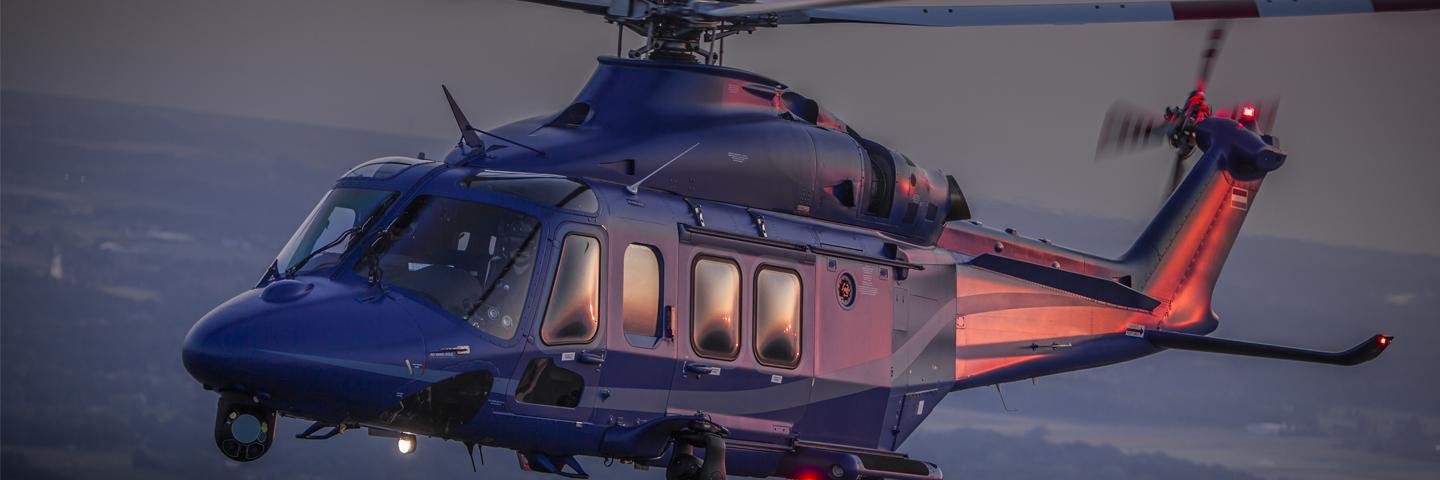
Agusta AW109 vs AW139 vs AW189: Complete Guide to Leonardo Helicopters
The AgustaWestland helicopters (now known as Leonardo) are among the most prominent names in the world of vertical flight, offering an integrated family of rotorcraft that meet diverse needs, ranging from executive luxury transport to demanding offshore operations. In this comprehensive guide, we take a detailed look at three of the most famous helicopters from this distinguished family: the AW109, AW139, and AW189, to provide you with a technical and objective comparison that helps you understand the fundamental differences between them.
1. AgustaWestland AW109: The Light Multi-Mission Helicopter
The AW109 (formerly known as the Agusta A109) is the helicopter from which the success story began. It was designed by the Italian company Agusta, which later merged with Westland to form AgustaWestland, and is now part of the Leonardo group.
History and Evolution
The development of the A109 dates back to the late 1960s, when it was designed to be a twin-engine civil helicopter meeting the needs of the commercial market. The first prototype made its maiden flight on August 4, 1971, received certification from the Federal Aviation Administration (FAA) in June 1975, and entered operational service in 1976. Production continues to this day, making it one of the longest production runs in helicopter history.
Design and Cabin
- Classification: Light twin-engine, multi-role helicopter.
- Capacity: Seats one or two pilots, and up to 6-7 passengers in the latest AW109 Grand version.
- Cabin: The AW109S Grand version featured a fuselage extension and larger main rotor blades, providing increased interior space.
Performance and Engines
- Engines: The AW109 has been equipped with a range of turbine engines over the years, starting with Allison 250-C14 engines up to Pratt & Whitney Canada PW206C and PW207C engines in modern variants.
- Maximum Speed: Approximately 311 km/h (168 knots).
- Cruise Speed: Approximately 285 km/h (154 knots).
- Maximum Range: Up to approximately 460 nautical miles (852 km).
- Service Ceiling: 20,000 feet.
- Cockpit: Features a full glass cockpit with a 4-axis digital autopilot, reducing pilot workload and enhancing situational awareness.
Missions and Applications
Thanks to its versatile design, the AW109 is used in a wide range of missions, including:
- Executive transport (VIP).
- Aeromedical evacuation (EMS).
- Law enforcement.
- Search and rescue (SAR).
- Light military missions (land and maritime).
2. AgustaWestland AW139: The Best-Selling Medium Helicopter
The AW139 is the backbone of Leonardo’s helicopter fleet, having achieved tremendous commercial success since entering service, becoming one of the best-selling helicopters in its class worldwide.
History and Evolution
The AW139 was developed in collaboration between Agusta and Bell Helicopters of the United States, and was initially known as the AB139. However, after Bell withdrew from the project, it was renamed the AW139. It made its first flight on February 3, 2001, and entered service in 2003. By July 2024, the number of helicopters produced exceeded 1,200, reflecting the immense market confidence it has enjoyed.
Design and Cabin
- Classification: Medium-lift, twin-engine helicopter.
- Capacity: Seats one or two pilots, and up to 15 passengers.
- Cabin Size: Offers comfortable interior space with various seating arrangements, widely used in offshore transport and public services.
Performance and Engines
- Engines: Powered by two Pratt & Whitney PT6C-67C engines, each producing 1,679 horsepower.
- Maximum Speed: Approximately 310 km/h (167 knots).
- Cruise Speed: Approximately 306 km/h (165 knots).
- Range: Up to 1,061 km (659 nautical miles) under optimal conditions, or 675 nautical miles without reserves.
- Service Ceiling: 20,000 feet.
- Rate of Climb: Up to 2,140 feet per minute.
Missions and Applications
The AW139 is characterized by exceptional versatility, making it the preferred choice in many sectors:
- Offshore transport supporting the oil and gas industry.
- Search and rescue (SAR).
- Firefighting.
- Law enforcement.
- Emergency medical services (EMS).
- Executive transport (VIP/Corporate).
- Maritime patrol.
- Military missions, with the AW139M version developed for the Italian Air Force, and the US Air Force operating the MH-139 Grey Wolf based on the AW139.
3. AgustaWestland AW189: The Super-Medium Helicopter for Demanding Operations
The AW189 represents the pinnacle of evolution in Leonardo’s medium helicopter family, designed to be the optimal solution for long-range offshore operations and the most demanding missions, building on the experience of its predecessors.
History and Evolution
The development of the AW189 was officially announced at the Paris Air Show in June 2011, as a civil version of the military AW149 helicopter, which itself is an enlarged development of the AW139. It made its first flight on December 21, 2011, received type certification in February 2014, and entered service the same month.
Design and Cabin
- Classification: Super-medium-lift, twin-engine helicopter.
- Capacity: Accommodates up to 19 passengers, with flexible seating arrangements to suit different missions (high-density transport, medical evacuation, or search and rescue).
- Cabin: Features the widest cabin in its class, with large sliding doors for easy loading of stretchers and equipment.
- Transmission System: Includes a main gearbox with 50 minutes of run-dry capability, allowing flight for up to 100 nautical miles even in the event of total oil loss.
Performance and Engines
- Engines: Available with two engine options: General Electric CT7-2E1 or Safran Aneto-1K.
- Maximum Speed: Approximately 294 km/h (159 knots) at 5,000 feet.
- Maximum Range: Up to approximately 1,043 km (563 nautical miles).
- Maximum Takeoff Weight: Up to 8,300 kg (18,300 lbs) in some configurations, increasing to 8,600 kg in the search and rescue version.
- Ice Protection: Features a Full Ice Protection System (FIPS) and a Limited Ice Protection System (LIPS), enabling operation in severe weather conditions.
Missions and Applications
The AW189 is specifically designed for the most demanding missions, particularly in harsh offshore environments:
- Offshore platform support, reaching deepwater platforms that previously required heavy helicopters.
- Search and rescue (SAR) in all weather conditions, day and night.
- Medical evacuation (MEDEVAC).
- Government transport and VIP.
- Humanitarian and emergency missions.
Complete Comparison Table
| Feature | AW109 (Grand New) | AW139 | AW189 |
|---|---|---|---|
| Classification | Light Twin | Medium Twin | Super-Medium |
| Max Takeoff Weight | ~3,175 kg | 6,400 – 6,800 kg | 8,300 – 8,600 kg |
| Passengers (Typical) | 6 – 7 | 12 – 15 | 16 – 19 |
| Max Speed | 311 km/h | 310 km/h | 294 km/h |
| Max Range | ~852 km (460 nmi) | ~1,061 km (573 nmi) | ~1,043 km (563 nmi) |
| Service Ceiling | 20,000 ft | 20,000 ft | Not specified (designed for low altitude) |
| Typical Engines | 2x PW207C | 2x PT6C-67C | 2x CT7-2E1 / Aneto-1K |
| Primary Missions | VIP, EMS, Police | Offshore, SAR, Rescue, Military | Deep Offshore, SAR, EMS |
Conclusion: Which Helicopter Suits Your Needs?
Choose the AW109 if:
- You are looking for a light and fast helicopter for executive or medical use.
- Your missions require flexibility and mobility in cities and small airports.
- You need a cost-effective helicopter in terms of operation and maintenance.
- Your typical passenger count does not exceed 6-7 people.
Choose the AW139 if:
- You need a medium multi-mission helicopter combining performance and reliability.
- Your missions include offshore transport, search and rescue, or government support.
- You need a passenger capacity ranging from 12 to 15 people.
- You are looking for a widely certified helicopter with a global support network.
Choose the AW189 if:
- You need a super-medium helicopter for long-range offshore operations and demanding missions.
- Your missions require maximum safety (50-minute run-dry gearbox) and reliability in harsh conditions.
- You need the widest cabin in its class with passenger capacity of up to 19 people.
- You are looking for a helicopter that combines the capabilities of heavy helicopters with the operational efficiency of medium helicopters.