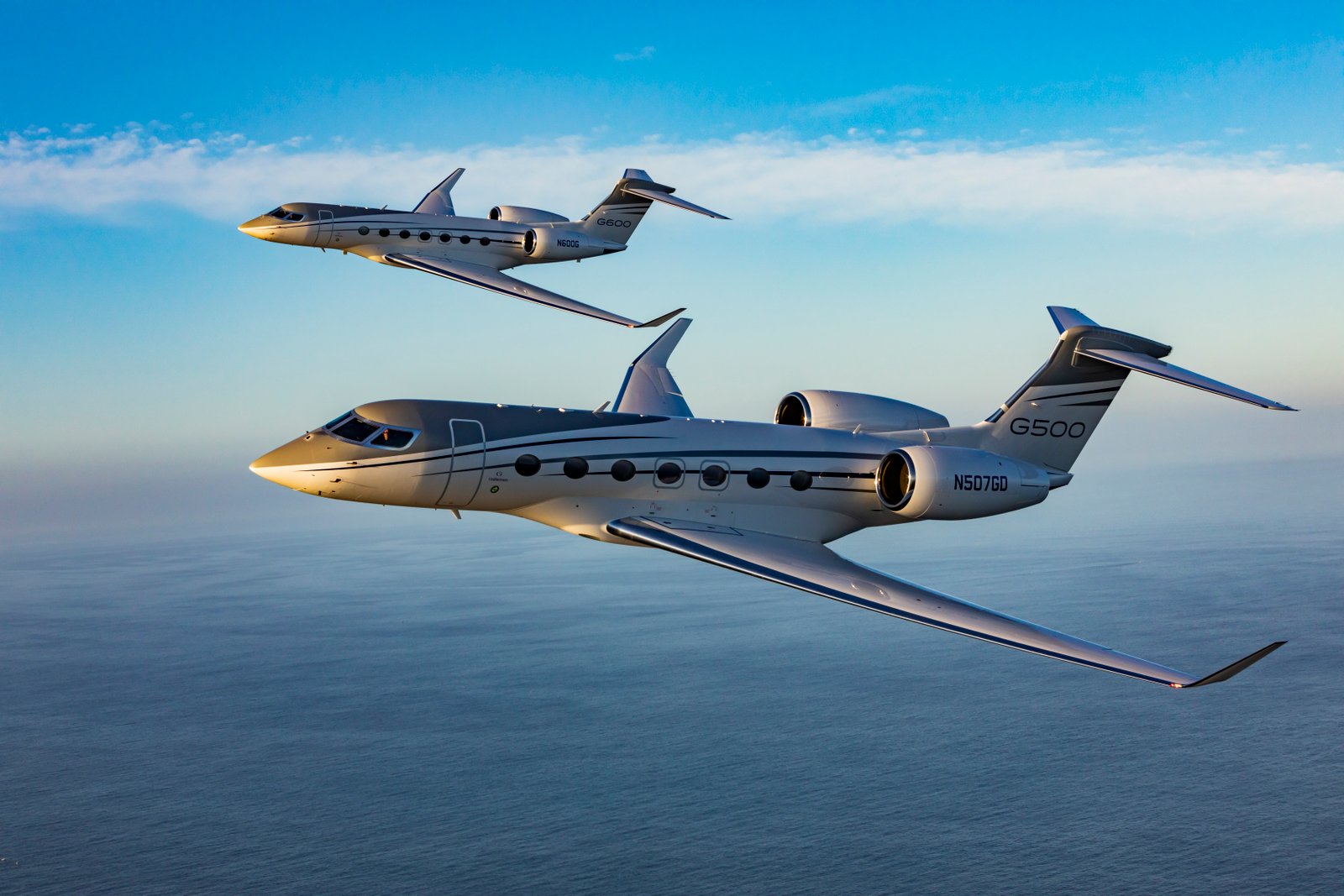
When it comes to large-cabin business jets, few names command as much respect as the Gulfstream G450 and Gulfstream G550. While these two aircraft share a common lineage and similar design philosophies, they serve distinctly different missions. Understanding the differences between them is essential for anyone considering these remarkable machines.
Overview: Two Generations of Excellence
The Gulfstream G450 and G550 were developed in parallel—a first for Gulfstream Aerospace. Both aircraft incorporate advanced systems and technologies, but they target different segments of the business aviation market.
Gulfstream G450 (originally designated GIV-X):
Production began in October 2004, with the last G450 delivered in January 2018. It shares many systems with the G550, including the nose landing gear, nosewheel steering, and oxygen systems. The G450 is often described as a large-cabin jet with transatlantic capability.
Gulfstream G550 (originally designated GV-SP):
First flown in 2002, the G550 entered service in 2003. Production for the civilian market ended in July 2021, with 603 aircraft delivered. The G550 set the standard for ultra-long-range business aviation and was the first commercial aircraft to feature synthetic vision as standard equipment.
Powerplant and Performance: The Heart of the Aircraft
The most fundamental difference between these two aircraft lies in their engines and the performance they deliver.
Gulfstream G450: Rolls-Royce Tay 611-8C
The G450 is powered by two Rolls-Royce Tay Mk 611-8C turbofan engines, each producing 13,850 pounds of thrust. These engines are a significant evolution of the Tay powerplants used in the GIV, with more durable components and improved reliability.
Key Engine Specifications:
- Thrust per engine: 13,850 lbs
- Fuel consumption: Approximately 401 gallons per hour combined
- Time Between Overhauls (TBO): 12,000 hours—far exceeding the GIV
Gulfstream G550: Rolls-Royce BR710 C4-11
The G550 is equipped with two Rolls-Royce BR710 C4-11 turbofan engines, each producing 15,385 pounds of thrust. These engines are more powerful and efficient, enabling the G550’s exceptional range.
Key Engine Specifications:
- Thrust per engine: 15,385 lbs
- Fuel consumption: Approximately 380 gallons per hour combined
- Proven reliability: The BR710 family has powered thousands of flights worldwide
Engine Comparison Summary
| Specification | Gulfstream G450 | Gulfstream G550 |
|---|---|---|
| Engine Model | Rolls-Royce Tay 611-8C | Rolls-Royce BR710 C4-11 |
| Thrust per Engine | 13,850 lbs | 15,385 lbs |
| Fuel Burn | ~401 GPH | ~380 GPH |
| TBO | 12,000 hours | Industry standard |
Avionics and Cockpit: The PlaneView Revolution
Both aircraft feature the Honeywell Primus Epic PlaneView cockpit, but with different levels of standard equipment.
Gulfstream G450 PlaneView Cockpit
The G450 features the PlaneView cockpit with four large Honeywell Primus Epic LCD displays. The system includes:
- Cursor control device in the outboard armrests for intuitive operation
- Kollsman Enhanced Vision System (EVS) as standard equipment, using a forward-looking infrared camera
- Head-Up Display (HUD) on the military style
- Gulfstream PlaneBook electronic flight bag for a paperless cockpit
Gulfstream G550 PlaneView Cockpit
The G550 was the first Gulfstream jet to feature the PlaneView integrated avionics flight deck. It includes:
- Synthetic Vision – Primary Flight Display (SV-PFD) as standard equipment—integrating terrain, major obstacles, and runway information with existing primary flight display data
- Enhanced Vision System (EVS) via infrared camera
- Head-Up Display (HUD)
- Triple Honeywell FMS and dual GPS systems
Avionics Comparison
| Feature | Gulfstream G450 | Gulfstream G550 |
|---|---|---|
| Avionics Suite | Honeywell Primus Epic PlaneView | Honeywell Primus Epic PlaneView |
| Synthetic Vision | Optional / Upgradeable | Standard (SV-PFD) |
| EVS | Standard (Kollsman) | Standard |
| HUD | Standard | Standard |
Cabin Comparison: Space and Comfort
Both aircraft offer stand-up cabins with identical height and width, but the G550 provides significantly more length and baggage capacity.
Gulfstream G450 Cabin
The G450 cabin measures 45 feet 1 inch in length (13.7 meters), with a width of 7 feet 4 inches (2.25 meters) and height of 6 feet 2 inches (1.88 meters). Baggage capacity is 169 cubic feet.
Typical Configuration: 12 to 16 passengers (up to 19 in high-density layouts)
Gulfstream G550 Cabin
The G550 cabin measures 50 feet 1 inch in length (15.27 meters), with identical width of 7 feet 4 inches (2.24 meters) and height of 6 feet 2 inches (1.88 meters). Baggage capacity is 226 cubic feet.
Typical Configuration: 14 to 18 passengers (up to 19 in high-density layouts)
Cabin Comparison Summary
| Specification | Gulfstream G450 | Gulfstream G550 |
|---|---|---|
| Cabin Length | 45 ft 1 in (13.7 m) | 50 ft 1 in (15.27 m) |
| Cabin Width | 7 ft 4 in (2.25 m) | 7 ft 4 in (2.24 m) |
| Cabin Height | 6 ft 2 in (1.88 m) | 6 ft 2 in (1.88 m) |
| Baggage Capacity | 169 ft³ | 226 ft³ |
| Typical Passengers | 12–16 | 14–18 |
| Maximum Passengers | 19 | 19 |
The G550’s additional 5 feet of cabin length and 57 cubic feet of extra baggage space provide greater flexibility for long-haul flights with larger groups.
Performance and Range: The Defining Difference
Range is the most significant distinction between these two aircraft and the primary factor in choosing one over the other.
Gulfstream G450 Performance
The G450 offers a maximum range of 4,350 nautical miles (8,056 km) at Mach 0.80. This range is sufficient for:
- New York to London
- New York to Moscow
- Los Angeles to Hawaii
- Miami to Paris (with reserves)
- London to Dubai
Key Performance Specifications:
- Maximum Speed: Mach 0.88
- Normal Cruise Speed: 476 knots (882 km/h)
- Service Ceiling: 45,000 feet
- Takeoff Distance: 5,450 feet (MTOW)
- Landing Distance: 3,190 feet (MLW)
Gulfstream G550 Performance
The G550 offers a maximum range of 6,750 nautical miles (12,501 km) at Mach 0.80. This range enables:
- New York to Tokyo
- London to Singapore
- Los Angeles to Sydney
- New York to Dubai (with ample reserves)
- London to Hong Kong
Key Performance Specifications:
- Maximum Speed: Mach 0.87
- Cruise Speed: 488 knots (904 km/h)
- Service Ceiling: 51,000 feet
- Takeoff Distance: 6,270 feet (MTOW)
- Landing Distance: 2,770 feet (MLW)
Performance Comparison Summary
| Specification | Gulfstream G450 | Gulfstream G550 |
|---|---|---|
| Range | 4,350 nm | 6,750 nm |
| Maximum Speed | Mach 0.88 | Mach 0.87 |
| Cruise Speed | 476 kts | 488 kts |
| Service Ceiling | 45,000 ft | 51,000 ft |
| Max Takeoff Weight | 74,600 lbs | 91,000 lbs |
Airframe and Structural Differences
While both aircraft share the GIV/GV lineage, there are important structural differences that affect performance and capability.
Gulfstream G450 Airframe
The G450 retains the basic GIV airframe but incorporates significant upgrades:
- Fuselage is 12 inches longer than the GIV
- Entire nose section of the G550 was grafted onto the aircraft, creating a 30% larger cockpit
- Cabin entry door moved three feet to the right
- Re-contoured canopy for improved aerodynamics
- Sleeker engine nacelles and improved engine pylons
- New composite, fixed-nozzle thrust reversers
Gulfstream G550 Airframe
The G550 features:
- A longer fuselage than the G450 (50 ft 1 in vs 45 ft 1 in)
- Enhanced wing design for improved aerodynamic performance
- Greater fuel capacity (6,078 gallons vs 4,370 gallons)
- Higher maximum takeoff weight (91,000 lbs vs 74,600 lbs)
Which Gulfstream Is Right for You?
Choose the Gulfstream G450 if:
1. You Need Transatlantic Capability Without Global Range
With 4,350 nautical miles of range, the G450 easily handles New York to London, Los Angeles to Hawaii, or Miami to Paris. If your typical missions involve transatlantic or transcontinental flights rather than transpacific routes, the G450 provides ample capability.
2. You Want Proven Reliability
The G450’s Rolls-Royce Tay engines offer an exceptional 12,000-hour TBO, far exceeding the GIV. The platform has been refined over decades of production, with thousands of flights demonstrating its reliability.
3. You Value the G550’s Technology in a Smaller Package
The G450 incorporates the G550’s nose section, creating a 30% larger cockpit with the same advanced PlaneView avionics suite, standard HUD, and EVS. You get the technology of the G550 in a more compact airframe.
4. You Need a Large Cabin Without the Global Reach
With a 45-foot cabin, the G450 offers ample space for 12-16 passengers, generous headroom, and 169 cubic feet of baggage capacity.
Choose the Gulfstream G550 if:
1. You Require Genuine Ultra-Long-Range Capability
With 6,750 nautical miles of range, the G550 can connect almost any two cities in the world without stopping. New York to Tokyo, London to Singapore, or Los Angeles to Sydney—the G550 makes these routes possible.
2. You Need the Largest Cabin in Its Class
At 50 feet 1 inch, the G550’s cabin is significantly larger than the G450’s, providing more living space for long-haul flights. The 226 cubic feet of baggage capacity accommodates extended trips with multiple passengers.
3. You Want the Highest Service Ceiling in Business Aviation
The G550’s 51,000-foot service ceiling allows it to fly above most weather systems and commercial traffic, providing smoother rides and more direct routing.
4. You Appreciate Aviation History
The G550 was the first commercial aircraft to feature synthetic vision as standard equipment. It earned Gulfstream the prestigious Collier Trophy in 2004—the highest award in American aviation.
5. You May Use the Aircraft for Special Missions
The G550 platform is used by the Israeli Air Force (G550 CAEW), the United States Air Force (EC-37B Compass Call and C-37B VIP transport), and other military operators worldwide. The platform’s proven reliability and capability make it suitable for the most demanding missions.
Summary: At a Glance
| Feature | Gulfstream G450 | Gulfstream G550 |
|---|---|---|
| Category | Large Cabin Jet | Large Cabin Jet |
| Range | 4,350 nm | 6,750 nm |
| Cruise Speed | 476 kts | 488 kts |
| Service Ceiling | 45,000 ft | 51,000 ft |
| Cabin Length | 45 ft 1 in | 50 ft 1 in |
| Cabin Width | 7 ft 4 in | 7 ft 4 in |
| Cabin Height | 6 ft 2 in | 6 ft 2 in |
| Baggage | 169 ft³ | 226 ft³ |
| Passengers | 12–16 (up to 19) | 14–18 (up to 19) |
| Engines | Rolls-Royce Tay 611-8C | Rolls-Royce BR710 C4-11 |
| Thrust per Engine | 13,850 lbs | 15,385 lbs |
| Fuel Capacity | 4,370 gal | 6,078 gal |
| Fuel Burn | ~401 GPH | ~380 GPH |
| First Flight | April 30, 2003 | July 18, 2002 |
| Production | 2004–2018 | 2003–2021 |
| Total Built | 365+ | 603+ |
| Avionics | PlaneView + HUD + EVS | PlaneView + SV + HUD + EVS |
Final Thoughts
The Gulfstream G450 and Gulfstream G550 represent two exceptional chapters in business aviation history. While they share a common lineage, they serve distinctly different missions and buyer preferences.
The G450 is the practical choice for operators who need transatlantic capability, a large cabin, and proven reliability. It delivers the technology and comfort of the G550 in a slightly smaller, more compact package.
The G550 is the benchmark for ultra-long-range business aviation. For those who regularly travel between continents and need the largest possible cabin, the G550’s 6,750-nautical-mile range and 50-foot cabin make it the aircraft of choice.
With over 900 GIV-family aircraft produced across all variants and the last G550 delivered in 2021, both models remain highly sought after in the pre-owned market. The G450 offers exceptional value for those seeking a large-cabin, long-range business jet, while the G550 remains an icon of global connectivity and business aviation excellence.