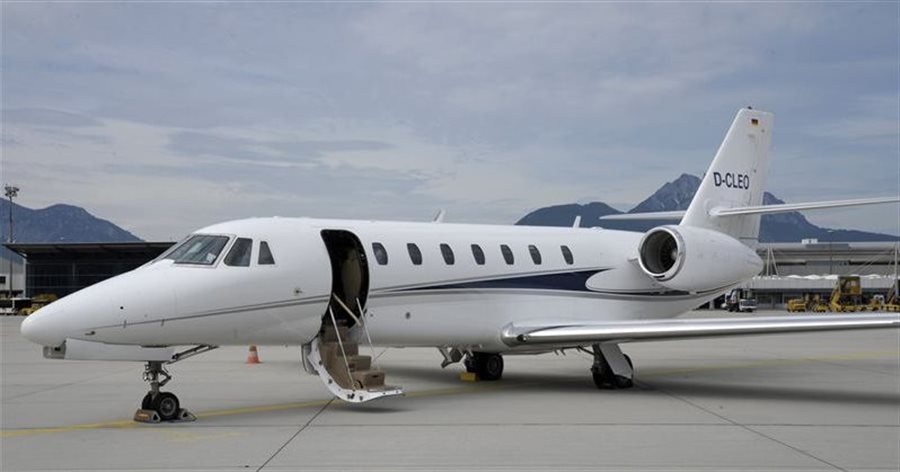
Challenger 300 vs Challenger 604: A Complete Comparison of Two Bombardier Workhorses
Both are Bombardier workhorses. Both carry the Challenger name. But the Challenger 300 and Challenger 604 belong to different classes and serve different missions. The Challenger 300 is a super-midsize jet designed for transcontinental efficiency. The Challenger 604 is a heavy jet built for longer legs and larger cabins. This comparison breaks down the specifications, cabin experience, operating economics, and mission fit for each aircraft.
Specifications Comparison
| Specification | Challenger 300 | Challenger 604 |
|---|---|---|
| Class | Super-Midsize | Heavy/Long-Range |
| Service Entry | 2004 | 1996 (604); 1998 variant |
| Range (max) | 3,100 nm (5,741 km) | 3,400–3,756 nm (6,286–6,955 km) |
| Typical Seating | 8–9 passengers | 10–19 passengers |
| Max Takeoff Weight | 38,850 lb (17,622 kg) | 48,200 lb (21,863 kg) |
| Cruise Speed | Mach 0.82 (541 mph / 870 km/h) | Mach 0.82 (470 kn / 870 km/h) |
| Max Altitude | 45,000 ft (13,716 m) | 41,000 ft (12,500 m) |
| Engines | 2 × Honeywell HTF7000 (6,826 lb thrust each) | 2 × GE CF34-3B (8,730 lb thrust each) |
| Cabin Length | 28.6 ft (8.72 m) | 28.41 ft (8.66 m) |
| Cabin Width | 7.17 ft (2.19 m) | 8.17 ft (2.49 m) |
| Cabin Height | 6.08 ft (1.85 m) | 6.07–6.08 ft (1.85 m) |
| Baggage Capacity | 106 cu ft (3.0 cu m) | Not specified in available sources |
Cabin Experience
Challenger 300: The Super-Midsize Standard
The Challenger 300 cabin is designed as a highly productive working environment. The standard interior features double-club seating with ample room for reclining seats. The layout incorporates ergonomic tables, power outlets, and telephones, providing an efficient working environment for all passengers.
A key advantage is the flat floor, which enhances passenger movement throughout the cabin. The absence of a secondary pressure bulkhead provides greater flexibility in optimizing the cabin, lavatory, and baggage spaces. The baggage compartment measures 106 cubic feet and is accessible throughout the entire flight.
The Challenger 300 was the first clean sheet design to satisfy customer needs unmet by any other aircraft in its class. It was built to provide outstanding reliability and maintain its unsurpassed value over time.
Challenger 604: The Heavy Jet Advantage
The Challenger 604 offers a wider cabin at 8.17 feet compared to the 300’s 7.17 feet. That extra foot of width makes a meaningful difference in perceived space, especially on longer flights.
The 604 is equipped with a forward lavatory and galley, a forward four-place conference group with a large table, an opposite two-place club with executive table, and an aft cabin with three rows of 2/2 twin seating. This layout supports both business meetings and rest on long missions.
The aircraft features SAT phones, individual VIP catering capability, an open bar, and a Nespresso maker. Day configuration offers six single seats and one divan with four seats. Night configuration converts to one double bed and three single beds.
Performance and Mission Capability
Challenger 300: Transcontinental Efficiency
The Challenger 300 delivers true transcontinental range. U.S. city pairs linked non-stop include Miami–Seattle, Washington–San Francisco, and Bangor–San Diego. Capabilities from New York include London and Los Angeles. International capabilities include Berlin–Riyadh, Geneva–Dubai, and Singapore–Tokyo.
The aircraft can climb directly to 41,000 feet in fewer than 20 minutes and complete non-stop transcontinental missions of up to 3,100 nautical miles. Takeoff distance is 4,810 feet and landing distance is 2,600 feet, ensuring full range capability from more than 280 North American airports.
Challenger 604: The Longer Legs
The Challenger 604 offers greater range — up to 3,756 nm depending on the source. This makes it suitable for transatlantic missions with full passenger loads. The 604’s higher maximum takeoff weight (48,200 lb) supports more fuel and passengers on longer routes.
With a cruise speed of Mach 0.82 and a service ceiling of 41,000 feet, the 604 flies above most commercial traffic and weather.
Operating Economics
The Challenger 300 was designed to deliver operating costs equivalent to or better than current midsize jets, all at a highly competitive price. Its two Honeywell HTF7000 engines are known for fuel efficiency and reliability.
The Challenger 604’s GE CF34-3B engines are proven workhorses but older technology. Fuel burn is higher, and maintenance costs reflect the aircraft’s heavier weight and larger systems.
For charter pricing, the Challenger 300 typically commands lower hourly rates than the 604. The 300 is classified as super-midsize while the 604 is a heavy jet, and pricing reflects that category difference.
Which Aircraft for Which Mission?
Choose the Challenger 300 if:
- You need transcontinental U.S. range with 8–9 passengers
- Operating economics and efficiency are priorities
- You value a flat floor and modern cabin design
- Your typical missions are under 5 hours
Choose the Challenger 604 if:
- You need transatlantic range with full passenger loads
- You require a wider cabin for longer flights
- You have 10–12 passengers and need the extra capacity
- Your missions regularly exceed 5 hours
Frequently Asked Questions
Can a Challenger 300 cross the Atlantic?
Yes, with certain limitations. The Challenger 300 has international capabilities including New York–London. However, westbound transatlantic flights against headwinds may require a fuel stop depending on payload and conditions.
What is the hourly charter rate for a Challenger 300?
As a super-midsize jet, the Challenger 300 typically charters in the 7,000–10,000 per hour range, depending on route, date, and availability.
What is the hourly charter rate for a Challenger 604?
As a heavy jet, the Challenger 604 typically charters in the 10,000–15,000 per hour range.
Which aircraft has a larger baggage compartment?
The Challenger 300’s baggage compartment measures 106 cubic feet and is accessible throughout the flight. The Challenger 604 offers comparable or slightly larger baggage capacity, though specific cubic footage varies by configuration.
Can both aircraft operate from shorter runways?
The Challenger 300 has excellent airfield performance with a takeoff distance of 4,810 feet and landing distance of 2,600 feet. The Challenger 604 requires longer runways due to its higher weight. Takeoff distance is approximately 5,840 feet.
Conclusion
The Challenger 300 and Challenger 604 serve different masters. The 300 is the efficiency-focused super-midsize jet ideal for transcontinental U.S. missions and operators who value modern design and lower operating costs. The 604 is the heavy jet for operators who need wider cabins, longer range, and the ability to carry more passengers across oceans.
Neither is “better” in absolute terms. The right choice depends on your mission profile, passenger count, and budget. For most domestic charter missions with 8–9 passengers, the Challenger 300 delivers exceptional value. For transatlantic or long-haul missions with larger groups, the Challenger 604’s extra range and cabin width justify its higher operating costs.